News
Filter News by:
news
Research fellow position available in marine biodiscovery at MARBLES partner the University of Aberdeen
14 Feb 2023
A position is available for an independent and highly motivated individual work as an interdisciplinary postdoctoral research assistant jointly between the Marine Biodiscovery Centre in the Department of Chemistry and the School of Law at the University of Aberdeen.
news

MARBLES partner UNIABDN: Sharing the benefits of the ocean
09 Feb 2023
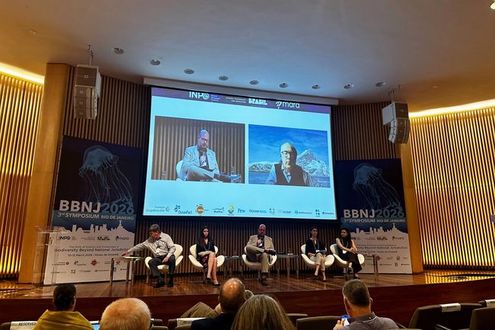
Members of MARBLES partner University of Aberdeen (UNIABDN), Abbe Brown (Professor in Law) and Marcel Jaspars (Professor in Chemistry) and partner ABS International (ABSint) Thomas Vanagt will be attending the next set of biodiversity of areas beyond national jurisdiction (BBNJ) treaty negotiations planned at BBNJ IGC5bis from 20 February – 3 March 2023, where they will be providing scientific input. There is a great deal of optimism that an ambitious BBJBN Treaty will be agreed by the end of these negotiations.
news

Hibernating Corals and the Microbiomes that Sustain Them
26 Jan 2023
A study led by University of California, Davis, found that microbial communities shift while a specific coral enters dormancy, providing it with an important seasonal reset. The work may carry implications for coral in warmer waters struggling with climate change and other environmental issues. The study is the first to demonstrate a persistent microbial community shift with dormancy in a marine animal.
news

A diverse microbiome may improve the adaptability of salmon at the sea stage
16 Jan 2023
A recent study explored the intestinal microbiota of Atlantic salmon during the seawater transfer process and found that gradually exposing the fish to changes in salinity led to a greater diversity in their intestinal bacterial communities – which could be associated with greater resilience and improved health.
news

A hitchhiker’s guide to floating marine debris
09 Jan 2023
Invasive species are recognised as one of the greatest threats to marine biodiversity worldwide, second only to habitat loss, and cost the UK economy £120 million a year.
news

EMB Artist In-Residence Programme
04 Jan 2023
‘EMBracing the Ocean’ provides grants for creative individuals or groups to co-create work with ocean scientists.
news

First coin celebrates deep sea creatures
03 Jan 2023
The Royal Australian Mint and national science agency CSIRO have joined forces to showcase marine life which call the southern and eastern coastline home.
news

The Deep Sea Discoveries And Sightings Of 2022 Are Fascinating
28 Dec 2022
Big vessels, carrying robust robotic explorers and sometimes submersibles piloted by humans, embark on deep sea expeditions each year. This lightless realm remains a largely mysterious place, and just around 25% of the seafloor is decently mapped. Deep ocean missions are often considered the new exploration of little-known — or just never-visited — places on Earth.
news

United States and Australia Team Up to Explore and Map the Pacific Ocean
21 Dec 2022
A major priority for NOAA and of the United Nations Decade of Ocean Science for Sustainable Development.
news

New alliance signals start of new era in European ocean research cooperation
13 Dec 2022
Universities and research institutes plan to take on a coordination role in European ocean research and education, as the EU gets ready to launch a marine Knowledge and Innovation Community.
news

MARBLES Mighty Microscopy Exhibition for Micro Day
01 Nov 2022
An immersive exhibition was launched to celebrate Micro Day in Leiden, the EU City of Science 2022. The microscopy exhibition organised by the MARBLES project, Institute of Biology (Leiden University) and Rijksmuseum Boerhaave was held in the museum from 22-24 October 2022.
news

Microbiome innovations drive sustainable food production and human health
25 Oct 2022
As our knowledge of the ‘micro-world’ deepens, we are witnessing more and more products, tools and other innovations resulting from microbiome research entering the market. These innovations are becoming increasingly important as they have the potential to help solve some major challenges of the 21st century, from mitigating climate change to ensuring food supply and combating human diseases.