Empowering ocean stewards: IOC–UNESCO launches new online course on operationalising the BBNJ Agreement
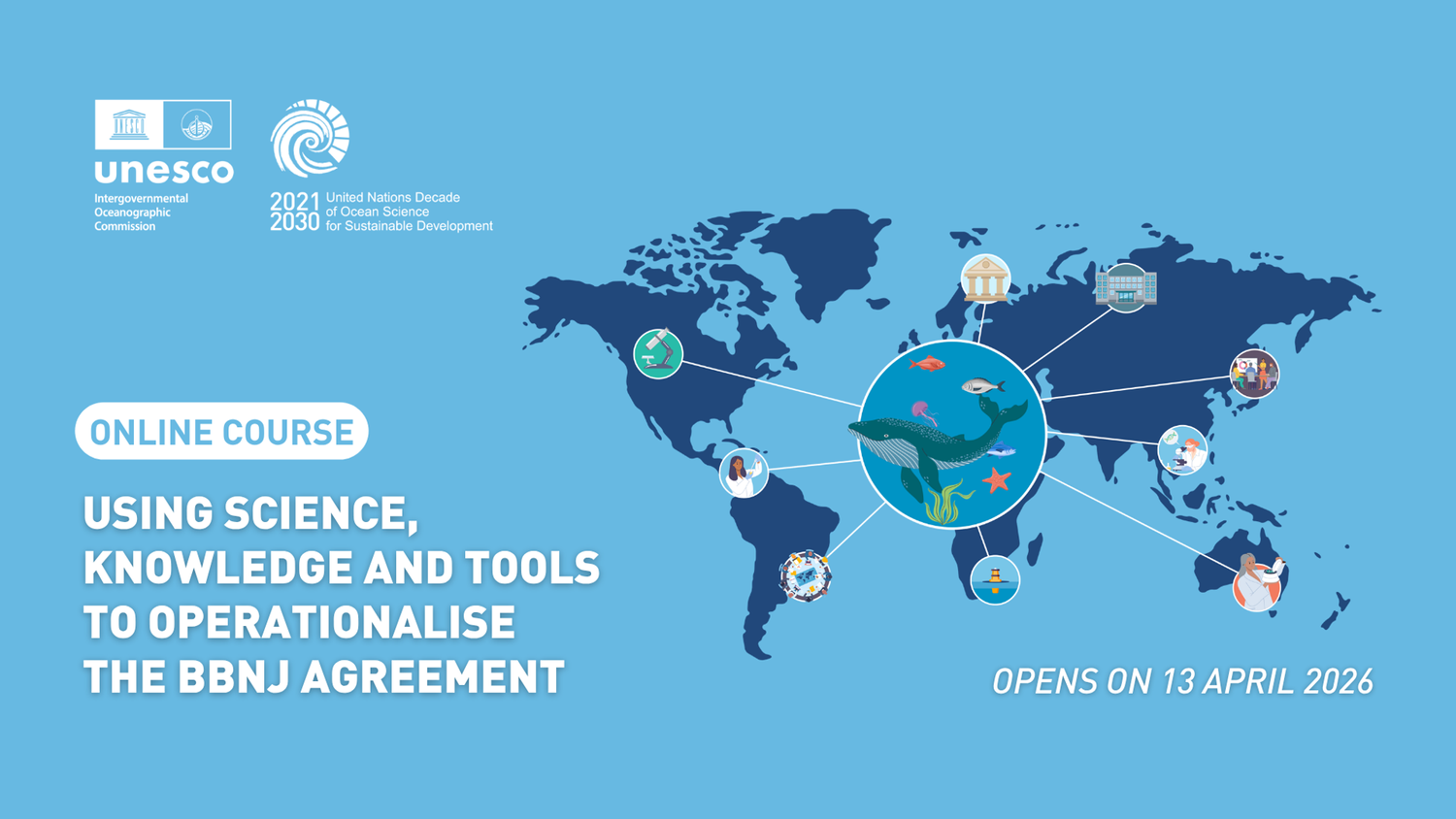
In April, a major new training opportunity is opening for ocean professionals, students, policymakers and anyone committed to the future of the high seas. The Intergovernmental Oceanographic Commission of UNESCO (IOC-UNESCO) has launched the comprehensive self-paced, online course Using Science, Knowledge & Tools to Operationalise the BBNJ Agreement features expert contributions from MARBLES researchers Abbe Brown and Marcel Jaspars (University of Aberdeen (UNIABDN)), and Thomas Vanagt (ABS International (ABSint/3BIO)).
The course arrives at a pivotal moment. After two decades of negotiations, the BBNJ Agreement represents a historic step toward safeguarding marine biodiversity in Areas Beyond National Jurisdiction (ABNJ). Its implementation will rely heavily on accessible, high‑quality ocean science — exactly the kind of expertise the MARBLES team champions. With Abbe Brown, a specialist in intellectual property, ethics and governance, Marcel Jaspars, a leading researcher in marine natural products and biotechnology and Thomas Vanagt, an expert in marine environmental law and sustainable ocean use, their insights strengthen the course’s treatment of marine genetic resources (MGR), access and benefit‑sharing (ABS) and the science–policy interface — areas central to both the BBNJ Agreement and MARBLES’ mission. Their involvement underscores the project’s growing role in shaping global conversations on deep‑sea stewardship and equitable ocean governance.
The course provides a structured introduction to the scientific foundations and governance frameworks that underpin the BBNJ Agreement. Learners explore:
- The ecological realities of a connected, changing ocean
- The Agreement’s four pillars and their scientific requirements
- Tools and databases essential for implementation
- Cross‑sectoral cooperation and data sharing mechanisms
- Emerging technologies shaping the future of ocean stewardship
Three modules covering ocean biodiversity, the Agreement in practice, and the actors and tools involved, guide participants from foundational knowledge to applied understanding. The estimated 20‑hour programme includes lessons, expert interviews, assessments, and curated global resources.
Open to all and offered at no cost, the course supports a wide range of learners: researchers, practitioners, technical staff, decision‑makers, students, and community stakeholders. It reflects UNESCO’s commitment to equitable access, with strong encouragement for participation from underrepresented groups. Developed through the Ocean Decade Capacity Development Facility and the OceanTeacher Global Academy, the course brings together contributions from dozens of experts worldwide.
The BBNJ Agreement will shape how nations, institutions, and scientists engage with the deep ocean for decades to come. Understanding its scientific underpinnings is essential for anyone working on biodiversity, ecosystem connectivity, deep sea impacts, or ocean governance. The involvement of MARBLES partners ensures that insights on MGR and ABS considerations, along with the science–policy interface are well represented.
Registration is open, course access begins: 13 April 2026