An underwater pharmacy comes to life at Naturalis with the MARBLES exhibition and outreach event
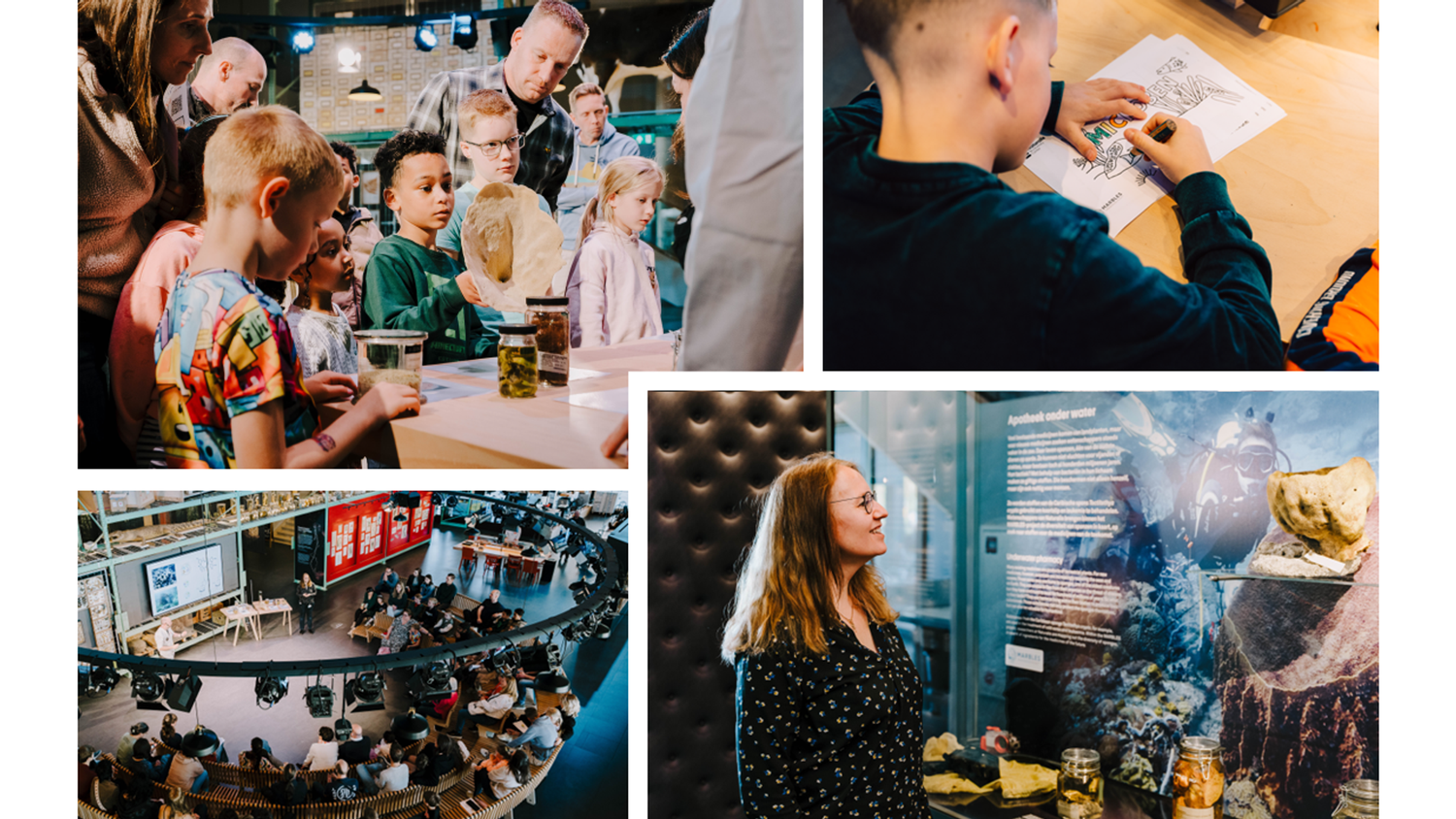
In April 2026, MARBLES brought the wonders of marine science to the public through a vibrant final outreach event and exhibition showcased by our partner the Naturalis Biodiversity Center (Naturalis) in Leiden, the Netherlands. With approximately 300,000 visitors passing through Naturalis each year, the venue offered an ideal platform to share how the remarkable diversity of marine life is being explored in the search for future medicines.
Exploring nature’s hidden medicine cabinet
At the heart of the exhibition was the concept of an “underwater pharmacy” the idea that the oceans hold immense, largely untapped potential for pharmaceutical discovery. While many medicines traditionally originate from terrestrial plants, scientists are increasingly turning their attention to marine ecosystems. The exhibition highlighted how marine organisms, particularly microorganisms, are a rich source of bioactive compounds with promising applications in human health.
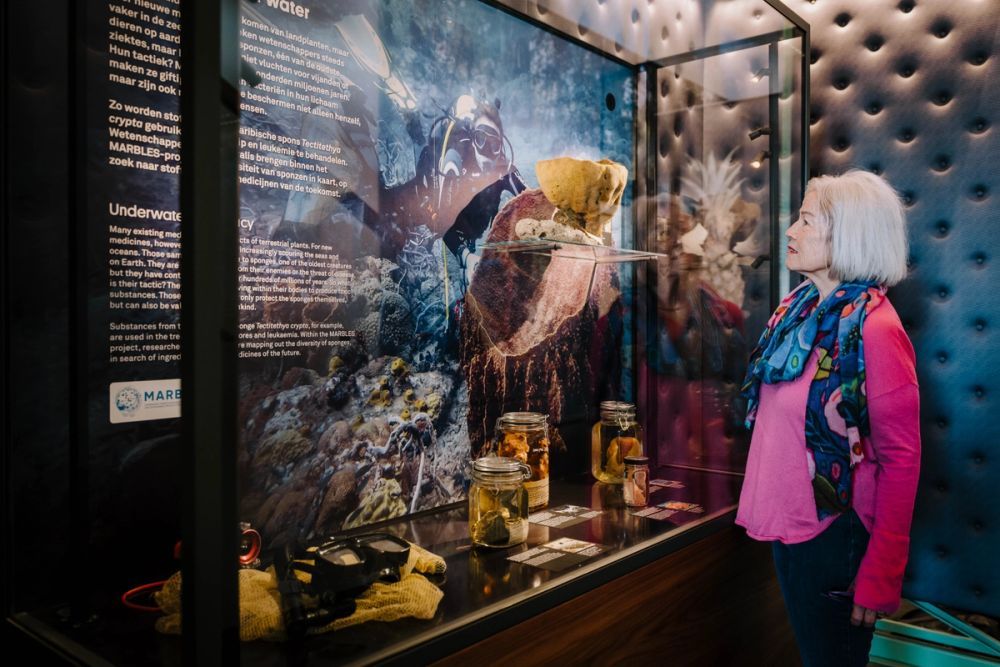
A central display focused on marine sponges, some of the oldest living animals on Earth. Unlike mobile organisms, sponges cannot escape predators or environmental threats. Instead, they rely on symbiotic bacteria living within their bodies to produce protective chemical compounds. These compounds not only defend the sponge but also show great potential as building blocks for new medicines, demonstrating the importance of marine biodiversity for future pharmaceutical innovation.
Inspiring the next generation
During the Dutch school holidays from 25-26 April 2026, MARBLES also hosted its final outreach event at Naturalis, transforming scientific research into an engaging and accessible experience for visitors of all ages. Both the exhibition and outreach event were led by MARBLES partner Nicole de Voogd, senior researcher at Naturalis, who guided visitors through the fascinating world of marine microbiomes and sponge biology. Nicole is an expert in marine biodiversity, with a particular focus on sponges, their ecology, taxonomy, and the microbial communities they host. Her research bridges disciplines such as ecology, microbiology, and chemical biology, contributing directly to projects like MARBLES that aim to unlock the pharmaceutical potential of marine microorganisms. Her passion for marine life and commitment to public engagement were evident throughout the event, helping translate cutting-edge science into inspiring stories for a broad audience.
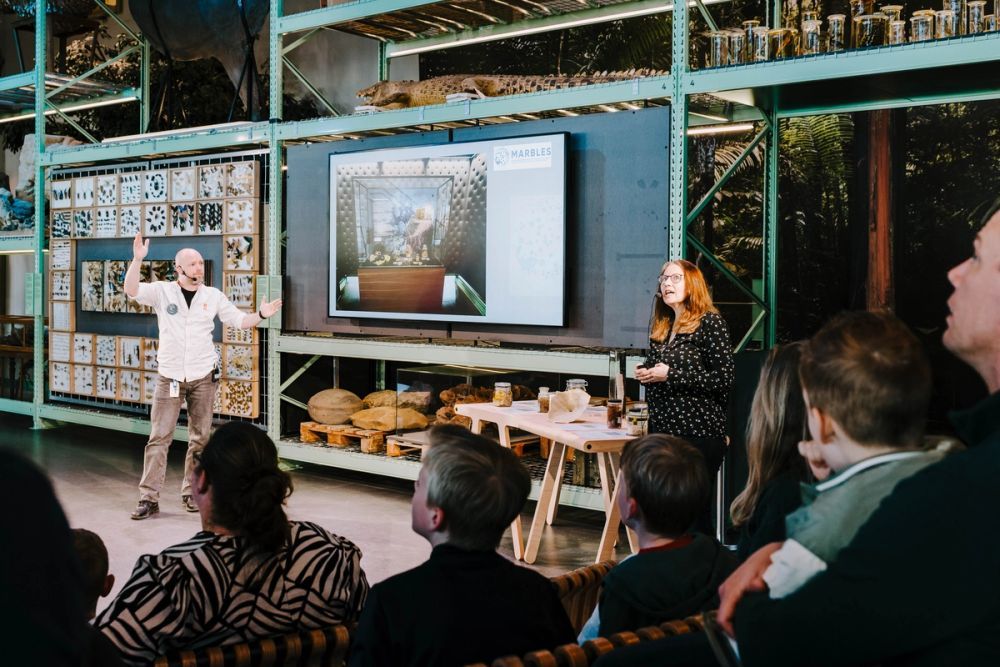
Four interactive science talks introduced visitors aged 8+ to the fascinating hidden role of marine microorganisms and their potential in drug discovery. These talks invited participants to think beyond the surface of the ocean and consider the microscopic organisms that play a vital role in ecosystem health and medical discovery.
Visitors also had the chance to view real specimens from the Naturalis collection, including marine invertebrates known for their unique chemical properties. These tangible examples helped bridge the gap between abstract scientific concepts and the living world, sparking curiosity and conversation. The event placed a special focus on inspiring younger visitors. Through a range of hands-on activities, children were encouraged to explore the microbial world in fun and creative ways. They could design their own microbes, participate in drawing and craft activities, and discover that microbes are not just “bad guys” but essential contributors to life on Earth and future medical breakthroughs. These activities created a welcoming space for learning, allowing children to engage with complex scientific ideas in an approachable and memorable way.
Connecting biodiversity and innovation
The MARBLES exhibition and outreach event at Naturalis successfully conveyed a key message: understanding and protecting marine biodiversity is essential for future medical solutions. By showcasing the links between tiny marine organisms and major scientific advances, the event highlighted the importance of continued research and conservation efforts, demonstrating how fundamental research can lead to real-world impact.
Through interactive storytelling, hands-on activities, real-world examples, and expert guidance, visitors left with a deeper appreciation of the ocean’s hidden potential and the role science plays in unlocking it. The “underwater pharmacy” is no longer just a concept confined to laboratories. Thanks to projects like MARBLES, it is becoming a story shared with society, inspiring curiosity, awareness and a sense of collective responsibility for our oceans.
Access the complete photo gallery of the Outreach event and Exhibition event.