• Home
    • About
      • Work Packages
      • Team
        • Consortium
          • Steering Committee
            • Advisory Boards
              • News
                • Events
                • Results
                  • Resources
                    • Cluster
                      Subscribe for news Log in
                      Subscribe to news Intranet
                      379 results found in 1ms

                      Type something to start searching.

                      Back to Resources

                      Spotlight Session: How can a marine sponge cure us?

                      image-cf0a69ddc635e2985f6bbb50f5c52e49c6ebbf30-1280x1706-jpg

                      MARBLES partner Naturalis Biodiversity Center holds Spotlight Sessions so their experts can share the latest knowledge, demonstrate museum collection pieces, and talk passionately about their work within the museum. Spotlights are interactive events where a scientist is interviewed in front of the museum audience of 150-300 people in three slots that day.

                      Here MARBLES researcher Niels van der Windt explains how marine sponges can be used to cure us! He shows some of his work as part of the MARBLES project, specifically focused on microbes in marine sponges and the natural products they can produce that have the potential to be used in pharmaceuticals.
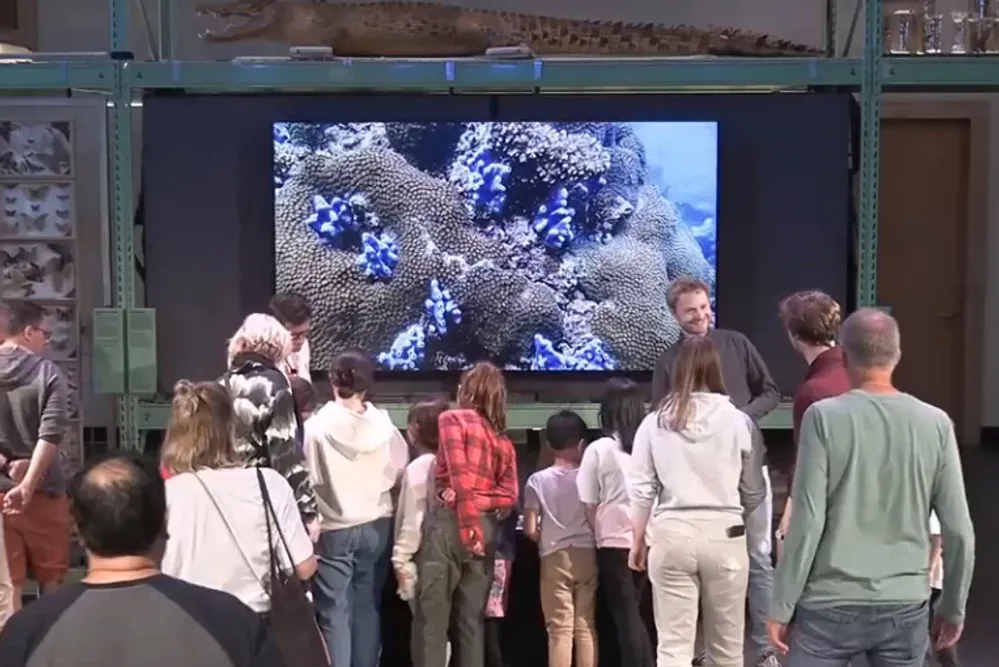
                      image-360bbf8498dcbaf7a3fbe861eec7875200fb6889-764x629-png

                      So far, 9000 sponge species have been identified. The sponges are extremely diverse and produce a lot of chemical compounds that can be used by us humans as medicines. For example, did you know the anti-viral drug acyclovir (for treatment of herpes virus infections) and the anti-cancer drug cytarabine (for treatment of leukemia) were both discovered from sea sponges?! The sponges make these chemical compounds in symbiosis with microbes like bacteria.

                      In Niels' PhD research within the MARBLES project, he is looking at which sponges they can find with the highest biodiversity of microbes and chemical compounds, in order to be able to search more specifically for compounds to use for future medicines.

                      Learn more about Naturalis Spotlight sessions and watch a selection of past talks

                      Learn more about the Naturalis Marine Biodiversity Group

                      Back to Resources

                      Contact us

                      Project Coordinator

                      Gilles van Wezel

                      g.wezel@biology.leidenuniv.nl

                      Project Manager

                      Mariana Avalos Garcia

                      m.avalos.garcia@biology.leidenuniv.nl

                      Project Communications & Press

                      Avril Hanbidge

                      avril@erinn.eu

                      Follow us

                      image-8a5238b8d18dd86c0b02e452f791716943f9b30d-1280x853-webp

                      This project has received funding from the European Union’s Horizon 2020 research and innovation programme under Grant Agreement no. 101000392 (MARBLES). This output reflects only the author’s view and the European Research Executive Agency (REA) cannot be held responsible for any use that may be made of the information contained therein.

                      Data Policy
                      Privacy Statement
                      This website uses cookies to ensure you get the best experience.