• Home
    • About
      • Work Packages
      • Team
        • Consortium
          • Steering Committee
            • Advisory Boards
              • News
                • Events
                • Results
                  • Resources
                    • Cluster
                      Subscribe for news Log in
                      Subscribe to news Intranet
                      379 results found in 1ms

                      Type something to start searching.

                      A diverse microbiome may improve the adaptability of salmon at the sea stage
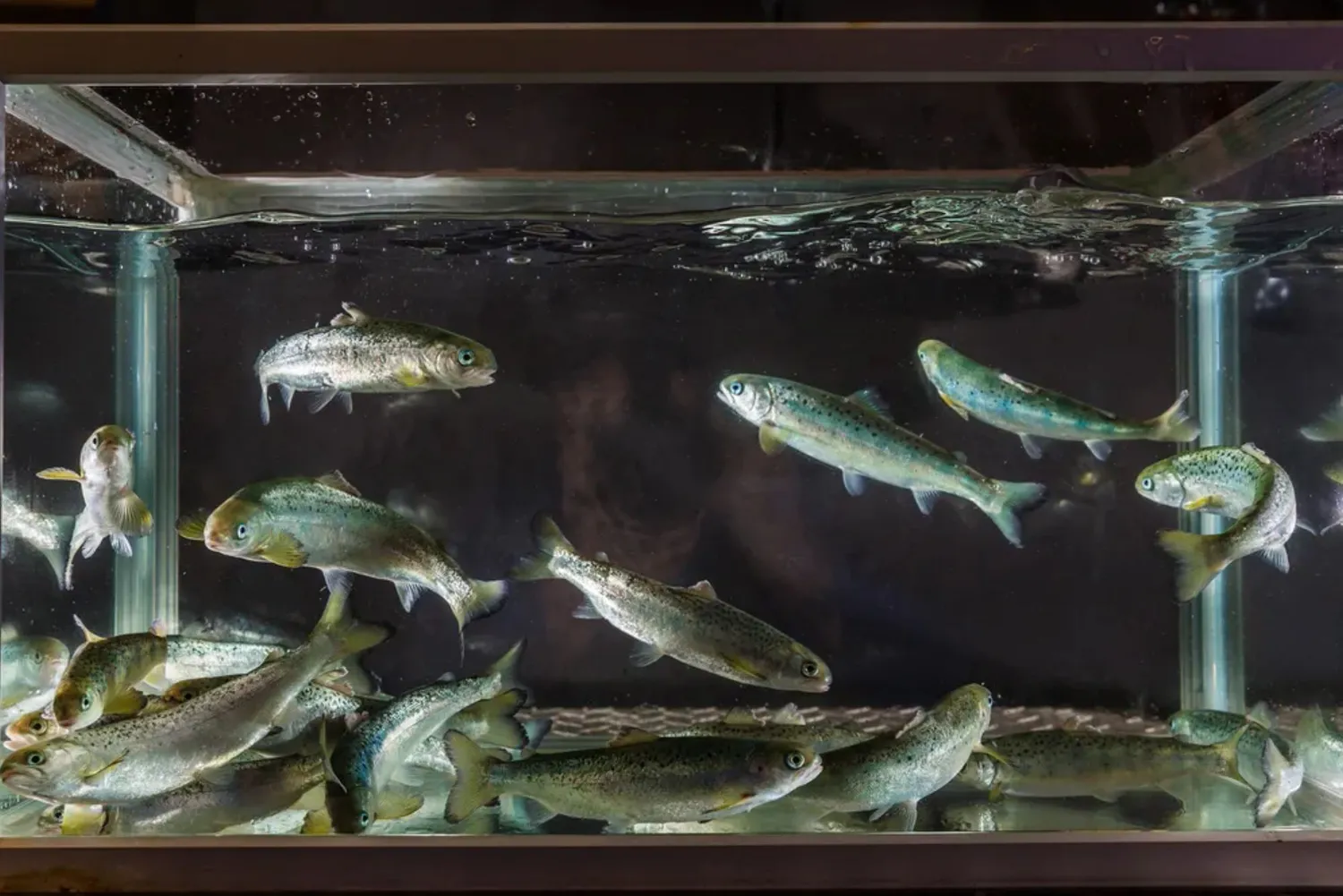
                      image-ec663f4477ca665ea25a0e902e4f1fe1079b6cc4-995x664-webp

                      A recent study explored the intestinal microbiota of Atlantic salmon during the seawater transfer process and found that gradually exposing the fish to changes in salinity led to a greater diversity in their intestinal bacterial communities – which could be associated with greater resilience and improved health.

                      Morales-Rivera, M.F.; Valenzuela-Miranda, D.; Nuñez-Acuña, G.; Benavente, B.P.; Gallardo-Escárate, C.; Valenzuela-Muñoz, V. (2023). Atlantic Salmon (Salmo salar) Transfer to Seawater by Gradual Salinity Changes Exhibited an Increase in The Intestinal Microbial Abundance and Richness. Microorganisms, 11, 76. DOI: https://doi.org/10.3390/microorganisms11010076

                      Learn more

                      Back to News & Events

                      Contact us

                      Project Coordinator

                      Gilles van Wezel

                      g.wezel@biology.leidenuniv.nl

                      Project Manager

                      Mariana Avalos Garcia

                      m.avalos.garcia@biology.leidenuniv.nl

                      Project Communications & Press

                      Avril Hanbidge

                      avril@erinn.eu

                      Follow us

                      image-8a5238b8d18dd86c0b02e452f791716943f9b30d-1280x853-webp

                      This project has received funding from the European Union’s Horizon 2020 research and innovation programme under Grant Agreement no. 101000392 (MARBLES). This output reflects only the author’s view and the European Research Executive Agency (REA) cannot be held responsible for any use that may be made of the information contained therein.

                      Data Policy
                      Privacy Statement
                      This website uses cookies to ensure you get the best experience.